AI Talking Head Technology: How It Works
What is an AI talking head?
An AI talking head is a digitally generated face that speaks, moves, and expresses emotion in video. Give it a photo or a 3D model, pair it with audio, and the result is a talking avatar that looks like a real person delivering real speech.
The technology started simple. Early AI face generators could animate a still image with basic lip movements. The output was uncanny, the latency was high, and the use cases were narrow. But the space has moved fast. Today, the best AI avatar generators produce photorealistic results that are difficult to distinguish from recorded video.
The real shift, though, isn't about visual quality. It's about interactivity.
From talking photos to live avatars
Most AI talking head tools on the market today work the same way: you upload a script, pick an AI avatar, and the system renders a video. The output is a pre-recorded clip. Synthesia, HeyGen, and D-ID all built their businesses around this model.
This is useful for things like training videos, marketing content, and product demos. You get a talking photo that delivers a scripted message without hiring a presenter or booking a studio. For many teams, that alone is a meaningful improvement.
But pre-rendered video has a ceiling. It can't respond to questions. It can't adapt to context. It can't hold a conversation. And increasingly, that's exactly what businesses need.
The jump to real-time: interactive AI avatars
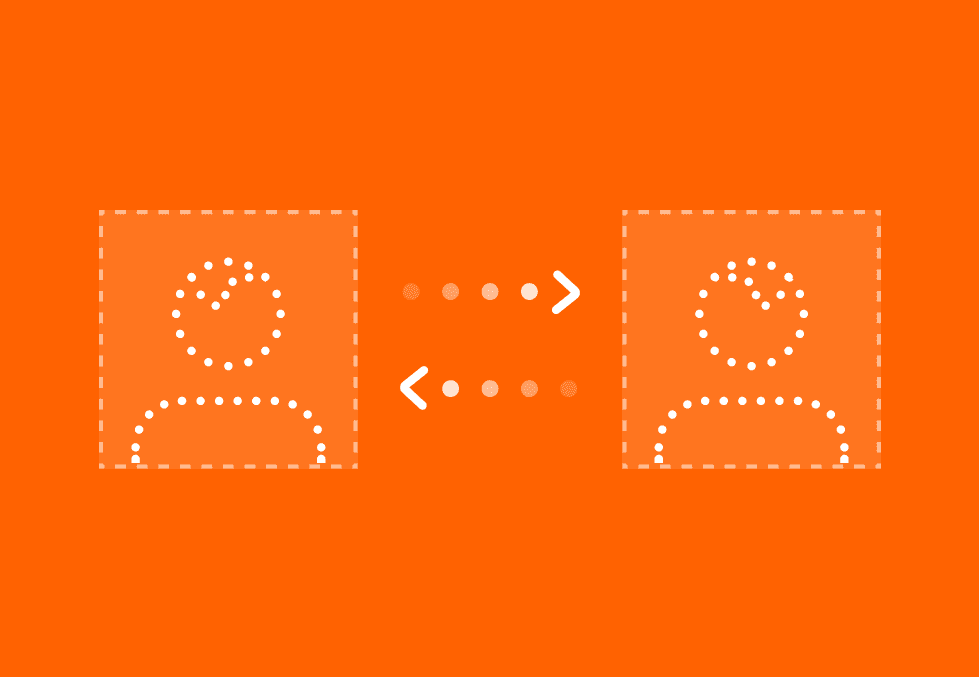
Real-time AI avatar technology works differently. Instead of rendering a video from a script, it generates facial animation frame-by-frame as a conversation happens. The AI avatar listens, processes, and responds with synchronised lip movements, facial expressions, and head motion, all in milliseconds.
This is the difference between a talking avatar that reads a script and a live avatar that holds a conversation. One is a video file. The other is an interactive experience.
Building this is significantly harder than pre-rendered generation. You need low-latency inference, real-time audio-visual synchronisation, and a rendering pipeline that can sustain 30fps without buffering. The AI face generator has to produce consistent, high-fidelity output under tight time constraints.
That's the problem we're solving at Anam. Our platform generates photorealistic, real-time AI avatars that developers can integrate via API. The avatars can be connected to any LLM, any voice model, and any knowledge base, turning a static AI assistant into something that feels present.
Why does a face matter?
There's a practical question worth addressing: why bother with an AI talking head at all? Text-based chatbots work. Voice assistants work. What does adding a face actually do?
The short answer: it changes how people engage.
Research on human-computer interaction consistently shows that visual presence increases trust, attention, and information retention. A talking avatar isn't just a nicer interface. It's a more effective one. Users spend more time in conversation, recall more of what was said, and report higher satisfaction.
For businesses deploying conversational AI, this matters. Whether you're building an AI sales agent, a customer support assistant, or a training tool, the quality of the interaction directly affects outcomes. An AI avatar video generator that produces real-time, interactive faces is a fundamentally different product from one that creates pre-recorded clips.
How AI avatar generators actually work
The technical pipeline behind an AI talking head typically involves several stages:
Face encoding: A source image or video is processed to extract identity features, facial geometry, and texture maps. This is what makes each AI avatar look like a specific person.
Audio-driven animation: Speech audio is analysed to generate lip sync, jaw movement, and co-articulatory motion. Better systems also model eyebrow raises, blinks, and micro-expressions tied to speech prosody.
Neural rendering: The animated face is rendered into video frames using generative models. For real-time applications, this has to happen in under 100ms per frame.
Streaming delivery: The rendered frames are transmitted to the client via WebRTC or a similar low-latency protocol. This is what makes the avatar feel "live" rather than buffered.
The best AI avatar generator platforms optimise across all four stages. Cut corners on any one, and you get either low-quality faces, noticeable lag, or both.
Where AI talking heads are being used
The use cases for AI avatar technology are expanding quickly:
Sales enablement: AI avatars that can demo products, answer objections, and qualify leads in real-time conversations. Not a video playing back, an actual dialogue.
Learning and development: Interactive training scenarios where employees practice conversations with an AI talking head that adapts to their responses.
Customer support: Visual AI agents that handle tier-1 queries with a human-like presence, improving resolution rates and customer satisfaction.
Healthcare: Patient-facing AI personas that explain procedures, check symptoms, or provide ongoing support with a consistent, trustworthy face.
In each case, the value of the AI avatar comes from its ability to be interactive. A pre-recorded talking photo can inform. A real-time live avatar can engage.
What to look for in an AI avatar generator
If you're evaluating AI talking head platforms, here are the things that actually matter:
Latency: Can the system generate responses fast enough for natural conversation? Anything above 500ms starts to feel like lag.
Visual quality: Does the AI face generator produce photorealistic output, or does it sit in the uncanny valley?
Customisation: Can you create a custom AI avatar that matches your brand, or are you limited to a preset library?
Integration: Does the platform offer an API? Can you connect your own LLM, TTS, and data sources?
Real-time capability: Is this a pre-rendered AI avatar video generator, or does it support live, interactive conversations?
The distinction between pre-rendered and real-time is the most important. Most platforms today are still optimised for the former. The market is moving toward the latter.
Try it yourself
We built Anam because we believe AI deserves a face. Not a cartoon. Not a chatbot window. A photorealistic, real-time, interactive AI avatar that can hold a genuine conversation.
If you're building conversational AI and want to see what a live avatar looks like in practice, check out our API docs or get in touch. We'd love to show you what's possible. 🔥
Explore more articles



© 2026 Anam Labs
SOC 2 Type II report · HIPAA-aligned controls.